
Blog
What a Fitness Brand Website Must Do – Private Label Fitness | Branded Fitness


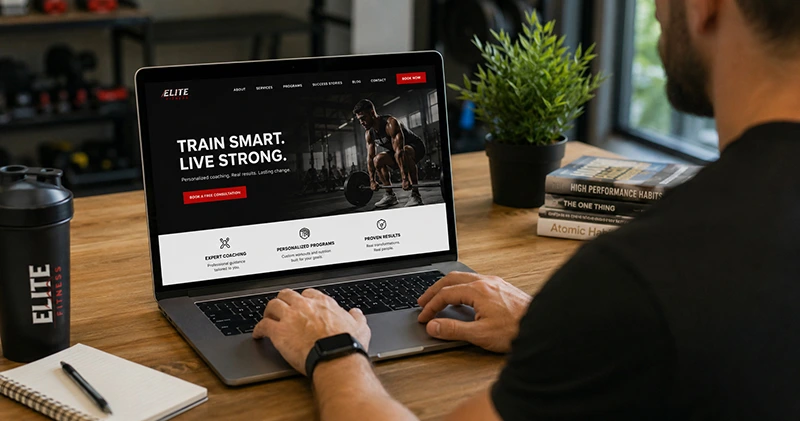
Most fitness business owners know when their website is underperforming.
You feel it in the gaps — too few leads, too many no-shows, weak online sales and a brand that looks smaller than the business you’re trying to build.
A fitness website should never function like a simple digital brochure.
It should operate as a sales tool, an authority builder and a revenue-generating platform that continues working even when you’re coaching clients, managing staff or off the clock.
That distinction matters more in the health and fitness industry than almost anywhere else. People are not simply buying workouts, meal plans or memberships.
They are buying confidence in your system. They are buying trust in your expertise. They are buying the feeling that your business is established, professional and capable of helping them finally follow through.
If your website feels generic, incomplete or confusing, trust starts leaking before the first conversation even begins.
Why Your Website Matters More Than Just “Looking Good”
A sharp design absolutely matters — but design is only the wrapper.
The real job of a website is to move a prospect from curiosity to action.
Your message, structure, offers and follow-up systems should all work together around how real fitness clients actually make decisions.
For most fitness professionals, a website has to wear several hats at once.
It needs to clearly explain what you do, who you help, why your system works and what someone should do next.
If you offer multiple services, the site also needs to organize those services in a way that feels clear instead of overwhelming.
This is where many fitness businesses stall.
A trainer throws together a homepage, a contact form, a few stock images and maybe an “About” page — then wonders why traffic doesn’t convert.
Usually the issue is not effort. It’s strategy.
A website that looks active is not the same thing as a website that is built to grow a business.
That’s one reason many professionals turn to Private Label Fitness.
The goal is not simply to create another fitness website. The goal is to build a professional digital platform that helps position the business as an authority while also supporting long-term growth.
What High-Performing Fitness Websites Actually Include
The best fitness websites are not trying to impress everybody. They are built to speak directly to the right audience and guide that audience toward a specific next step.
Your homepage should quickly answer four questions:
✅ Who do you help?
✅ What result do you deliver?
✅ Why should someone trust your approach?
✅ What should they do next?
If any of those answers are unclear, visitors leave.
In fitness, attention spans are short and skepticism is high. Prospects are comparing you against local competitors, online coaching programs, mobile apps and free content all at the same time.
Your services also need structure.
If you provide personal training, nutrition coaching, online programs, supplements, educational courses or group coaching, each offer should have a clearly defined role inside your business model.
That does not mean creating a bloated website. It means making every offer easy to understand and easy to act on.
Credibility should also be woven throughout the site — not hidden away on a testimonials page nobody visits.
Client transformations, certifications, years of experience, educational content, before-and-after success stories, media features and a clear coaching philosophy all help establish authority.
So does polished branding and professional presentation.
Whether people admit it or not, presentation strongly influences perceived value.
Messaging That Sells More Than Workouts
One of the biggest mistakes fitness professionals make is building a website around features instead of outcomes.
Prospects do not care that you offer 45-minute sessions, three coaching tiers or a member portal until they understand what those things actually do for them.
Strong messaging translates services into results.
For your clients, that may mean:
✅ Fat loss
✅ Strength
✅ Accountability
✅ Better energy
✅ Improved health markers
✅ Convenience
✅ Confidence
For your business, it means clearer positioning and higher conversion because prospects immediately understand why they should choose you over someone else.
The language also needs to match the market you want to attract.
A premium transformation studio should not sound like a discount gym. A nutrition expert should not sound vague or hobby-level. The right messaging helps justify the right pricing.
A Website Should Support Scale
A website for a solo trainer is very different from a website designed for a scaling fitness business.
If your goal is to move beyond trading time for money, your website needs infrastructure.
That may include:
✅ Lead capture systems
✅ Email follow-up automation
✅ Digital programs
✅ Online education
✅ eCommerce
✅ Branded resources
✅ Client onboarding systems
✅ Membership areas
✅ Supplement sales
✅ Educational content libraries
At that point, your website stops being “marketing” and starts becoming part of your business operating system.
This becomes incredibly valuable when your income has been tied too tightly to your physical hours.
A properly built website creates leverage.
It allows you to support recurring memberships, online courses, branded products, challenges and continuity programs that continue generating revenue beyond live sessions.
That philosophy is a major focus behind the systems developed through Private Label Fitness — helping health and fitness professionals build not just a website, but a complete branded ecosystem around their expertise.
The Real Goal Is Bigger Than Leads
When fitness professionals say they need a “better website,” what they usually mean is they want more leads. Fair enough.
But the highest-performing websites solve much larger business problems.
They:
✅ Improve close rates because prospects arrive pre-sold
✅ Increase perceived authority
✅ Make pricing conversations easier
✅ Reduce onboarding friction
✅ Improve retention
✅ Create new revenue opportunities
✅ Strengthen brand consistency
✅ Support long-term scalability
Most importantly, they give fitness professionals a centralized platform to sell education, products, services and branded resources under THEIR OWN LOGO.
That’s where the conversation changes.
If your website only helps people contact you, it’s doing the minimum. If it helps you build a true business ecosystem, it becomes a profit center.
For example:
👉 A nutrition coach can use their website to book consultations, distribute educational content, grow an email list and sell private-label supplements.
👉 A gym owner can use their platform to support challenges, member resources, automated follow-up, retail products and online education.
👉 A wellness professional can create recurring revenue through courses, memberships and branded content.
Different business models require different strategies, but the principle remains the same: your website should help you scale what you already do well.
Common Website Mistakes Fitness Businesses Make
The first mistake is trying to say too much at once. When a website becomes overloaded with offers, text or confusing navigation, visitors leave rather than sort it out.
The second mistake is generic branding. If your website looks like every other trainer template online, you lose authority before someone even reads your content. In a trust-driven industry, sameness becomes expensive.
The third mistake is failing to build for follow-up. Not every visitor buys immediately. Without lead capture, email nurturing and ongoing communication systems, you are depending entirely on perfect timing.
The fourth mistake is treating the website like a one-time project. Markets evolve. Offers evolve. Positioning evolves. Your website should be flexible enough to grow with your business.
Build a Website Around Revenue — Not Just Layout
The smartest place to start is not design. It’s your business model.
Decide what your website needs to help you sell today and what it should support tomorrow.
A gym focused on memberships requires a different structure than a coach selling premium transformation programs or a wellness entrepreneur building multiple digital income streams.
From there, build the customer journey:
❓ What should a new visitor see first?
❓ What proof do they need?
❓ What action should they take?
❓ What happens if they are interested but not ready yet?
Those questions shape websites that actually perform.
Then treat branding like a business decision — not a cosmetic one. Professional visuals, clear messaging and strategic positioning influence trust, pricing power and retention more than many operators realize.
Finally, think beyond launch day.
A website becomes more valuable when it is supported by educational content, branded resources, email marketing, products and systems that deepen the relationship after the initial sale.
That is how a website stops being an expense and starts becoming infrastructure for long-term growth.
If your current website looks acceptable but still does not help you generate more revenue, improve retention, strengthen authority or create additional income streams, then it is not finished yet.
The right website should make your business look bigger, your expertise feel stronger and your services easier to buy from. That’s the standard worth building toward.
Related Posts
:quality(85):upscale()/2026/08/11/808/n/1922729/ba5caafd6a7b68ede306e1.96820766_.jpg?w=1300&fit=1300,800&ssl=1 "How These Fitness Influencers Work Out With Their Kids")
How These Fitness Influencers Work Out With Their Kids
-
Posted by
 Transform Your Health & Fitness
:quality(85):upscale()/2026/08/03/958/n/1922729/3ed71a696a710f9386dec9.35320325_.png?w=1300&fit=1300,800&ssl=1 "I Went to a Fitness Festival — Here’s What It’s Really Like")
I Went to a Fitness Festival — Here’s What It’s Really Like
-
Posted by
Transform Your Health & Fitness

What “Whose Line” Taught Me About Fitness
-
Posted by
Transform Your Health & Fitness

5 Overlooked Movements for Real-World Fitness
-
Posted by
Transform Your Health & Fitness

Do You Need a Fitness Coach? How to Tell an Information Problem from a Support Problem
-
Posted by
Transform Your Health & Fitness

What Bodybuilders and Shred Guitarists Have in Common….! – Private Label Fitness | Branded Fitness
-
Posted by
Transform Your Health & Fitness

First Half into the Second Half… – Private Label Fitness | Branded Fitness
-
Posted by
Transform Your Health & Fitness

How to Value Yourself as a Fitness Professional – Private Label Fitness | Branded Fitness
-
Posted by
Transform Your Health & Fitness
:quality(85):upscale()/2026/06/15/718/n/1922729/bd90498b6a3025154f0565.30776188_.png?w=1300&fit=1300,800&ssl=1 "Best Amazon Prime Day Fitness Deals")
Best Amazon Prime Day Fitness Deals
-
Posted by
Transform Your Health & Fitness

How to Keep Clients Coming Back (Without Chasing Them Every Month) – Private Label Fitness | Branded Fitness
-
Posted by
Transform Your Health & Fitness

What Fitness Pros Should Know About Certifications – Private Label Fitness | Branded Fitness
-
Posted by
Transform Your Health & Fitness
:quality(85):upscale()/2026/06/11/860/n/1922729/7389f3b26a2b0ef2ba82d3.12739764_.jpg?w=1300&fit=1300,800&ssl=1 "15-Minute Outdoor Strength Training | PS Fitness")
15-Minute Outdoor Strength Training | PS Fitness
-
Posted by
Transform Your Health & Fitness